


The Hard Court Swing: Why This Is the Most Punishing Stretch in Tennis
The transition from summer matches on clay and grass to North American hard courts is one of the most physically demanding phases of the competitive tennis calendar. While clay allows sliding and grass absorbs impact, hard courts provide zero surface give, turning every sudden stop into a jarring shockwave that travels directly up the lower extremities.
For professional athletes and competitive club players alike, late summer presents a perfect storm of heat, dense match schedules, and an unrelenting and unforgiving court surface. The 2026 North American hard court swing places immense physical demands on the body across a tight window of marquee events:
-
Mubadala DC Open (Washington, D.C.): July 27 – August 2, 2026
-
Cincinnati Open (Cincinnati): August 13 – August 23, 2026
-
Winston-Salem Open (Winston-Salem, N.C.): August 23 – August 29, 2026
-
US Open Main Draw (New York): August 30 – September 13, 2026
Beyond the professional tour, the most American public and recreational courts are constructed from asphalt or concrete topped with acrylic. As late summer turns into fall, local leagues, high school seasons, and junior circuit tournaments reach peak volume. Understanding the biomechanics of hard court tennis injuries is essential for maintaining physical durability when the calendar turns to hard courts.
Why Hard Courts Cause More Damage
The core issue with hard court play comes down to basic physics: kinetic energy must go somewhere. When a player plants their foot on clay, loose surface particles slide, dissipating the energy of motion over time and distance. On a hard court, high friction creates an immediate, static grip. Because the surface does not yield, the kinetic energy from rapid movement reflects back into the player's joints, tendons, and muscle tissue.
Stopping abruptly on hard court subjects the body to massive deceleration forces over milliseconds. A systematic review across tennis surfaces published in the ITF Coaching & Sport Science Review found that hard courts consistently carry higher injury incidence than clay courts, with lower limb overuse showing the clearest statistical variance. The review cited studies recording injury rates on clay as low as 3.5%.
While hard courts do put extra shock on the body, no court is completely safe from common tennis injuries. The speed of grass-court play contributes to muscle strains and clay can lead to fatigue.
|
Court Surface |
Surface Give |
Deceleration Mechanism |
Primary Lower Body Physical Wear |
|
Clay |
High (Topsoil slides) |
Friction spread over sliding distance |
Muscle fatigue from extended rally length |
|
Grass |
Moderate (Soft soil base) |
Dampened impact with rapid footwork |
Acute muscle strains from unpredictable bounces |
|
Hard Court |
None (Acrylic over concrete) |
Sudden, high-impact force absorption |
Joint pain, tendonitis, and stress fractures |
Knees: The Primary Shock Absorbers
During hard court play, the knees absorb the vast majority of impact. Every time a player sprints to the sideline, lunges wide, and pushes off to return to the center mark, the patellar tendon and joint cartilage sustain extreme compressive forces.
Tennis knee pain typically intensifies during three primary movement patterns:
-
Hard Stops: Plant-and-cut footwork transfers forward momentum instantly into the patellar tendon.
-
Serve Landings: Repeatedly landing heavily on the lead leg after an explosive serve loads the front knee joint.
-
Wide Lateral Lunges: Pushing back toward the center without the cushion of a slide forces the quadriceps and knee structure to bear the entire load.
Players transitioning from clay or indoor courts are at risk because they haven’t trained for the distinct issues of concrete and acrylic. If muscles and joints are used to adapting to the softer clay, players need to re-adapt to a new environment.
World #1 player Jannik Sinner dropped out of early hard-court swing tournaments due to an ongoing knee injury before ultimately announcing he wouldn’t play the 2026 U.S. Open.
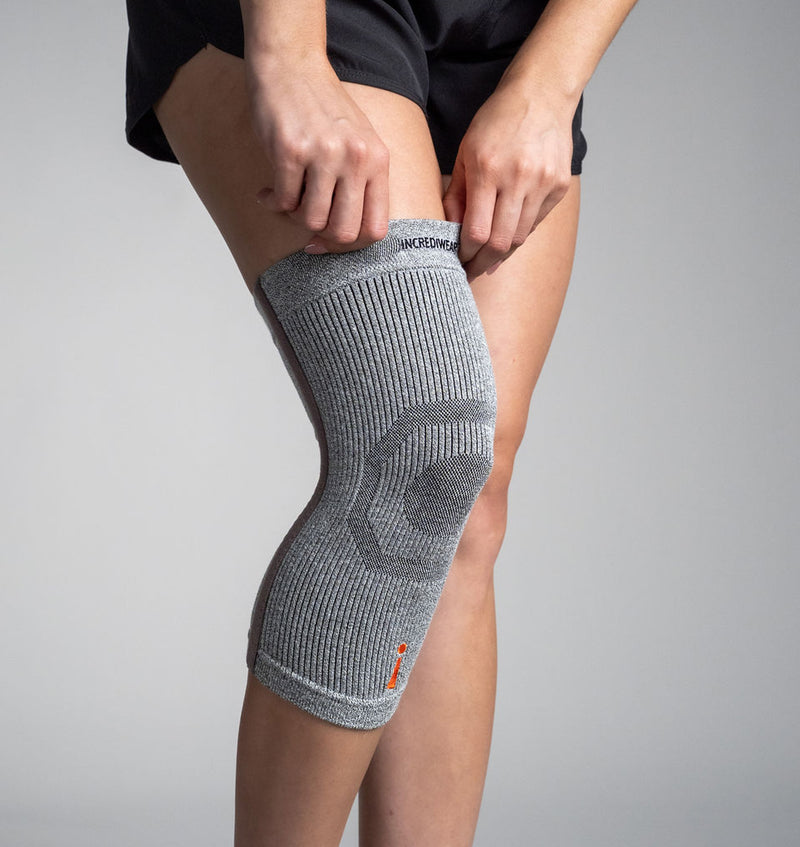
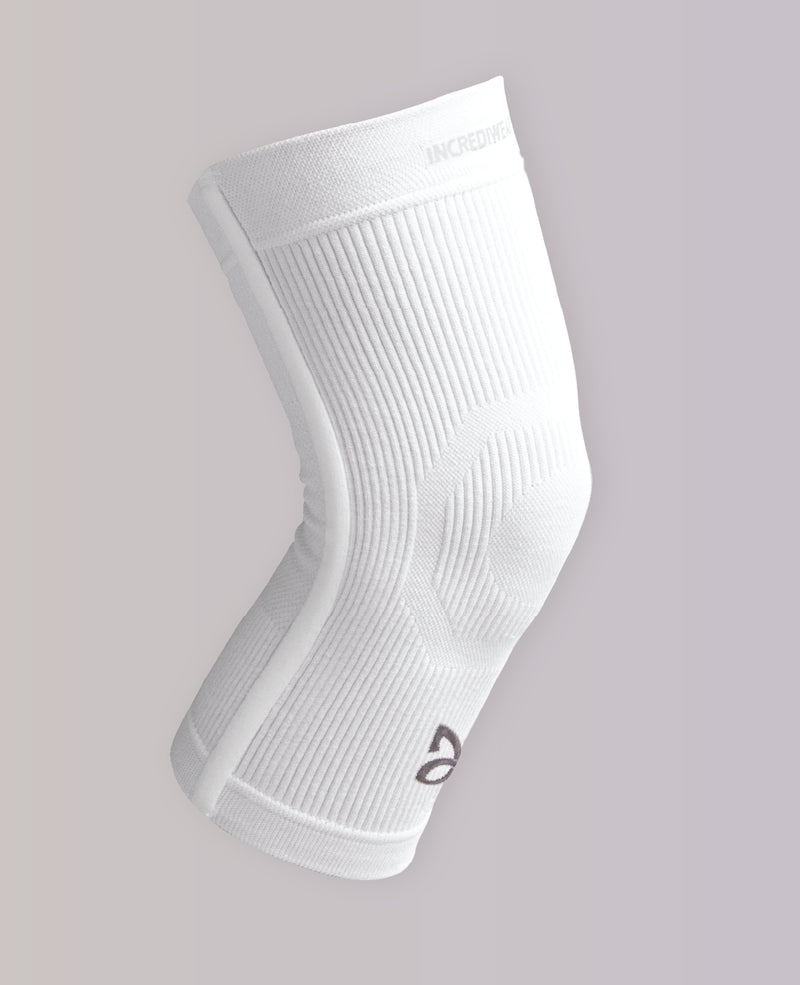
To help manage tissue health around the joint, targeted wearable technology like the Incrediwear Knee Sleeve can promote joint support. By promoting localized circulation, it is an essential for players navigating Knee and Tendonitis concerns during heavy play.
Ankles and Feet: Traction vs. Torso Momentum
Hard court surfaces are engineered for maximum traction, which allows explosive multi-directional movement. However it also introduces a major vulnerability: when a shoe sole sticks instantly to acrylic, upper body momentum keeps moving.
A severe tennis ankle sprain can occur when a player plants hard, the shoe grips, and the foot rolls outward under lateral momentum. Outside of acute sprains, foot and heel discomfort often builds across a multi-week hard-court schedule.
Key contributors to lower foot and ankle stress include:
-
Over-Gripping Outsoles: Fresh or aggressive tread patterns that catch unexpectedly during lateral cuts.
-
Worn Outsoles: Shoes that have lost their interior cushioning, transferring ground vibration straight to the plantar fascia.
-
Late-Match Fatigue: Muscle exhaustion in the lower leg causing sloppy foot placement and compromised stability during the third set.
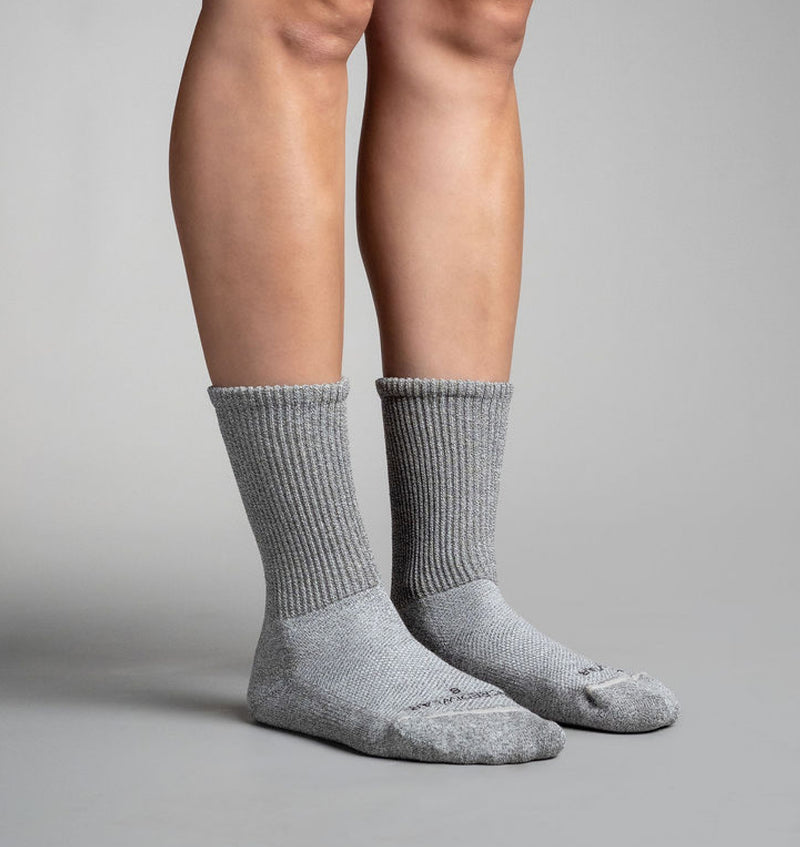
Unaddressed strain in the arch or heel can spread upward, altering gait and creating secondary issues in the Achilles tendon. Using the Incrediwear Ankle Sleeve alongside specialized options like Sport Socks or Circulation Socks can help athletes manage sprains, strains, and plantar fasciitis.
Calves, Achilles, and the Lower Leg
Mid-tournament breakdowns in the lower leg come from a single violent event. Instead, fatigue builds up over back-to-back match days before leading to a final injury. The lower leg provides the primary spring mechanism for sprint acceleration and explosive serve positioning. On a surface with zero give, the gastrocnemius, soleus, and Achilles tendon work overtime to store and release elastic energy. When weekly playing hours jump suddenly during summer leagues or tournament swings, muscle fatigue and soreness can quickly turn into localized tightness or micro-tears, a condition often referred to in sports medicine as "Tennis Leg."
Lower leg micro-trauma builds through:
-
Repeated explosive push-offs on rigid asphalt.
-
Inadequate post-match recovery intervals between consecutive tournament days.
-
Sudden spikes in daily court time without progressive conditioning.
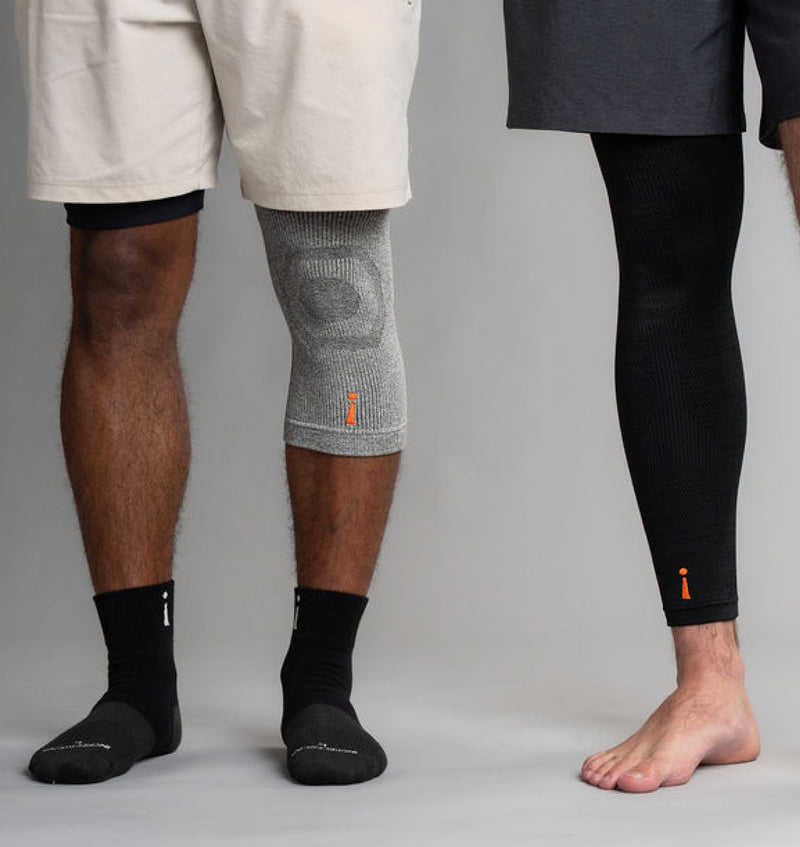
Wearing the Incrediwear Calf Sleeve or full Leg Sleeve during or after intense play can help maintain optimal blood movement through tight muscles.
Optimizing Tennis Recovery Between Matches
When match turnarounds are compressed into 24 hours or less, blood circulation becomes a critical part in determining how your body feels the next morning. Unlike standard elastane compression garments that rely on a tight mechanical squeeze to push fluid, Incrediwear uses advanced element-infused fabric. When brought into close proximity with the skin, natural body heat activates the embedded elements within the weave, emitting far-infrared waves into the surrounding tissue.
In clinical laser Doppler testing, resting blood flow and blood speed increased when wearing Incrediwear active fabric.
Because Incrediwear products operate without constrictive compression, they can be worn on court during play, throughout post-match cool downs, and overnight during natural sleep cycles.
Smart Practical Habits for Hard Court Play
To manage the physical demands of hard court tennis, combine wearable fabric technology with proactive court habits:
-
Progressive Hard Court Volume: Increase hard court playing time gradually over two to three weeks prior to a competitive tournament series.
-
Routine Footwear Replacement: Replace tennis shoes as soon as the midsole cushioning becomes compressed or the outsole tread flattens out.
-
Targeted Wearable Coverage: Outfit high-stress lower body areas using the Knee Sleeve, Ankle Sleeve, Calf Sleeves, Leg Sleeves, or Circulation Socks to maintain dynamic blood circulation between sessions.
-
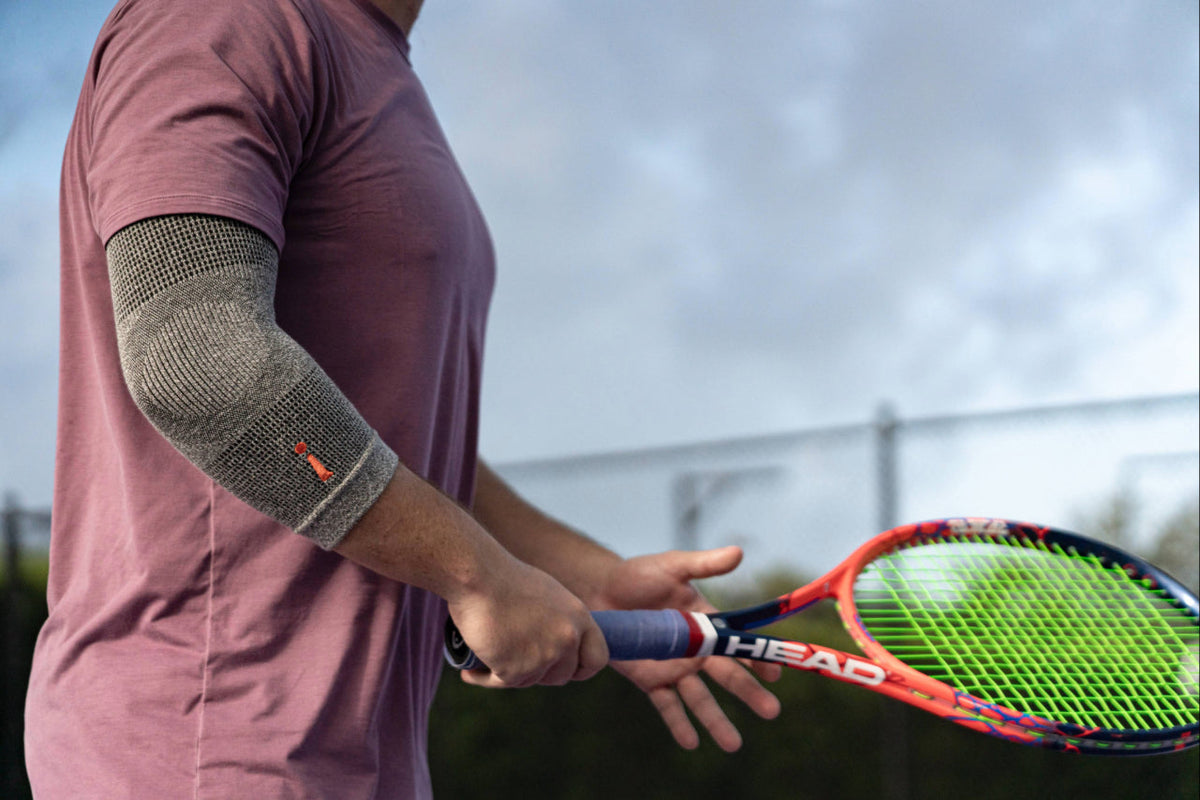
Whole-Body Care: While lower limb injuries dominate hard court stress, don't neglect upper body demands like tennis elbow, shoulder tightness, or wrist strain.
Note: Incrediwear products are designed to complement active recovery and physical conditioning. They are not standalone medical treatments or guaranteed injury prevention tools. Persistent pain or acute structural injuries should always be evaluated by a qualified healthcare professional.
Frequently Asked Questions
Are hard courts harder on your body than clay?
Yes. Hard courts feature a rigid concrete or asphalt base topped with acrylic, offering zero surface give. Unlike clay, which allows players to slide and dissipate impact energy, hard courts reflect kinetic force back into the lower extremities, placing significantly higher impact load on joints, tendons, and muscles.
Why do tennis players get injured more in the summer?
Summer coincides with dense tournament calendars and peak league play. The combination of high ambient heat, extended match times, hard surface friction, and compressed recovery windows creates cumulative muscular fatigue, making lower limb tissues far more susceptible to overuse strain.
What are the most common lower body tennis injuries?
The most frequent lower body tennis injuries include patellar tendonitis, lateral ankle sprains, calf strain ("Tennis Leg"), plantar fasciitis, and knee joint soreness driven by rapid deceleration on high-friction court surfaces.
How do you recover between matches on back-to-back days?
Optimizing sports recovery between daily matches requires prioritizing active hydration, gentle mobility work, consistent sleep, and enhanced blood flow. Wearing non-compressive, element-infused fabric sleeves overnight helps maintain blood flow and nutrient delivery to exhausted muscle tissue while you rest.
How often should you replace tennis shoes on hard courts?
Hard court surfaces act like sandpaper on shoe outsoles and midsoles. Competitive players should replace their court shoes every 45 to 60 hours of play—or as soon as visible tread wear occurs or shock absorption noticeably degrades—to prevent unnecessary impact strain on the feet and knees.
Read more
Across the globe, racket and paddle sports are experiencing an unprecedented surge in popularity. Padel has more than 35 million players globally, supported by over 58,334 courts worldwide—roughly ...
Summer is ending, temperatures are dropping, and Major League teams chasing a spot in the baseball playoffs are demanding the absolute maximum from their rosters precisely when those bodies have th...
Leave a comment
All comments are moderated before being published.
This site is protected by hCaptcha and the hCaptcha Privacy Policy and Terms of Service apply.